posted in India by prempanicker
During his 2014 campaign, Modi exhorted people to ‘Remember Nirbhaya when you go to vote’
3871 DAYS ago today, a 22-year-old girl was brutally gang-raped in a Delhi bus by six savages.
Contemporary events led me to revisit my journals, and my memory, from that time. And some events stand out, even after the passage of over a decade:
#1. Within 24 hours the police had arrested the perpetrators. No one had to tell them to act; no one had to force them to file an FIR. A heinous crime occurred and was solved, within 24 hours — by the Delhi police, note.
#2. The Parliamentary Standing Committee on Home Affairs met to discuss the crime. Union Home Secretary RK Singh and Delhi Police Commissioner Neeraj Kumar were summoned and explanations were sought. The committee was then headed by Venkaiah Naidu of the BJP. No attempt was made to prevent the discussion; there was no pushback that Naidu was “politicizing” the issue.
#3: Despite the swiftness of the police action, the Delhi High Court took it upon itself to monitor developments. It demanded names and details of police officials who were on duty in the area that day; it hauled up the police for not having acted swiftly in the case of a robbery that had occurred in the same bus earlier in the day. It sanctioned the setting up of fast-track courts to try such heinous offenses (the first such court was inaugurated by then CJI Altamas Kabir on January 2, just 16 days after the crime). No one had to tell the court to take suo moto cognizance and ensure that the law and order machinery functioned effectively.
#4. By 21 December, the victim had undergone five surgeries but remained critical. The government appointed a committee of doctors to attend on her. When her condition showed no sign of improvement, then Prime Minister Manmohan Singh chaired a cabinet meeting on 16 December where it was decided to fly her to Mount Elizabeth Hospital in Singapore for further care. The victim died in Singapore in the early hours of 29 December, and her body was cremated on 30 December. The BJP, the main opposition party, criticized the high security around the cremation and likened it to the Emergency (No one accused the BJP of playing politics — which in fact it was doing; the BJP knew, as did everyone else, that security had been heightened in view of the nationwide protests and the heightened anger of the public).
#5. In less than a year, on 10 September 2013, the fast-track court of Delhi found the four adult defendants guilty of rape, murder, unnatural offenses and destruction of evidence. (After four different appeals to the Supreme Court, and a mercy petition to the President, all four were duly executed on 20 March 2020.)
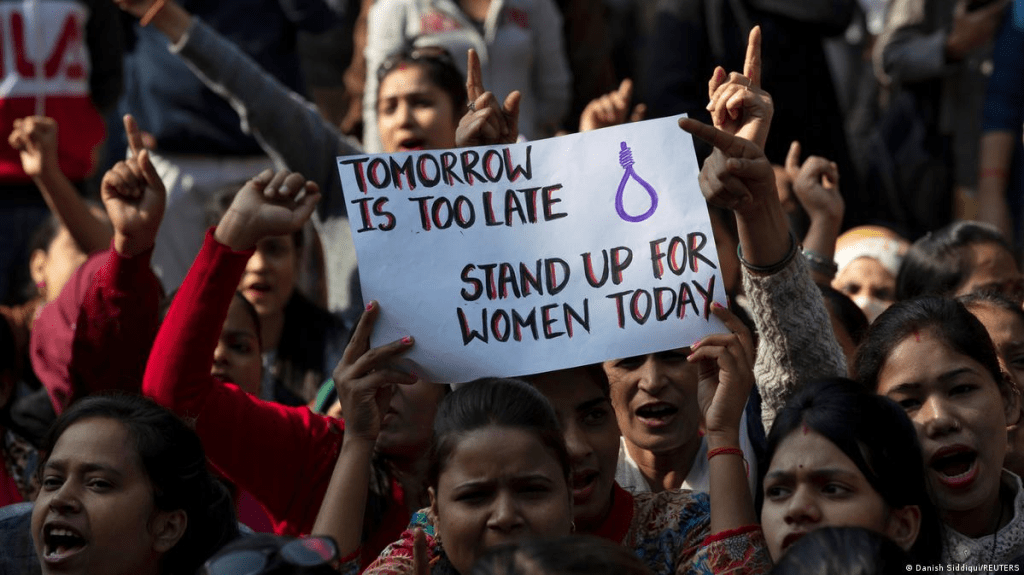
#6. Public protests broke out in the immediate aftermath and rapidly spread to cities and metros across the country. On 21 December, thousands of protestors clashed with the police at India Gate. Among them were ‘Baba’ Ramdev of Patanjali and former Army chief Vijay Kumar Singh, now MoS for Road Transport and Highways in the Union cabinet and studiously silent on Manipur. Efforts by the police and the government to discourage protestors resulted in the protests escalating further as thousands more joined in to defy the state and demand answers.
Following the death of the victim, protests and candlelight vigils continued across the country. The BJP took active part and also demanded a special session of Parliament to discuss the case. The armed forces canceled its New Year celebrations. Sympathetic protests were held in Nepal, in Pakistan, Bangladesh and Sri Lanka — and no one thought these countries were interfering in India’s internal affairs. Major foreign publications carried multiple articles covering the rape and its aftermath, without their possible connections to George Soros being dragged into the discussion or their motivations being questioned.
#7. Sonia Gandhi, chairperson of the then-ruling coalition UPA, visited the victim in Safdarjung Hospital. PM Manmohan Singh made a televised address to the nation on 24 December. Leader of the Opposition Sushma Swaraj demanded death by hanging for the rapists; BSP chief Mayawati asked for action so strict that none would ever dare act in such a heinous manner again; then Lok Sabha Speaker Meira Kumar asked that a new law be passed to ensure the safety of women; Sheila Dixit, then chief minister of Delhi, herself described the national capital as becoming the rape capital of the world. And that is just a shortlist of prominent leaders who spoke out in the moment.
#8. On 22 December, former CJI JS Verma was named to head a judicial commission to suggest, within 30 days, amendments to the criminal laws aimed to deal with rape. And on 26 December, former Delhi High Court judge Usha Mehra headed a commission of inquiry to identify lapses and fix responsibility for the crime and suggest measures to make Delhi safer for women. As a result, on 3 February 2013 the Criminal Law (Amendment) Ordinance 2013 was promulgated, providing for amendments to the IPC, the Indian Evidence Act and related other acts. The ordinance provided for, among other things, the death penalty in cases of rape.
This is not a comprehensive account of the events surrounding the Nirbhaya rape case, merely a quick summation of some key points from the past that cast some light on our present.
WHY bring up all this? Why now?
Because this past week, as the horrific crime in Manipur unfolded and ramified, I have been sitting here thinking of the country we used to be, just a decade or so ago.
It was not a safe country for women then (and I doubt it will ever be one). It was not a country where governments took responsibility and quit (and I doubt if it will ever be one). It was not a country where police handled outpourings of public anger with sensitivity rather than lathis and tear gas (and I doubt it will ever be one).
But it was a country, a people, with a semblance at least of conscience. We were a people who were slow to be aroused to anger — but when some more than ordinarily gruesome crime shook us out of our apathy, we were a people who would stand up to the might of the state and not back down in the face of water canons and teargas shells; a people who would demand accountability and be satisfied with nothing less.
We were a people who would take to the streets in our numbers to make our voices heard. And we were a people who remembered and, when the time came, used our votes to convey our anger. (Such events in fact became political faultlines — during his 2014 campaign, Modi exhorted people to ‘Remember Nirbhaya when you go to vote’.)
How did we get from that to this?….
https://prempanicker.wordpress.com/2023/07/23/twtwtw-july-23/
Shielding governance failure will not resolve Manipur’s problems
Four Indian intellectuals who were murdered for their ideas (2013-2017)
 After the truth-shower