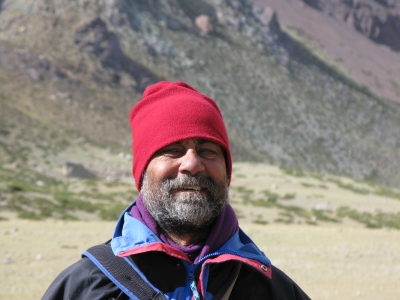
When his 13-year-old daughter stumbled home six years ago and told her father that she had been gang-raped, Ranjit embarked on a mission to get justice in a manner that is almost unheard of in rural India.
Going against the wishes of the entire village in the eastern state of Jharkhand, and challenging India’s highly patriarchal culture, the rice farmer reported the crime to the authorities and pursued the case relentlessly until the three men were brought to trial.
Their story is told in To Kill a Tiger, a documentary by the award-winning Indian-Canadian director Nisha Pahuja. The film follows 14 months of the family’s determined pursuit of justice in a country where the “rape culture” makes it rated as the world’s most dangerous place for girls and women, with high rates of sexual assault recorded but where an estimated 99% of rape cases go unreported.
Kiran* was at a wedding on the evening of 9 April 2017. She had stayed behind to dance when her parents returned home. At about midnight, three village men dragged her into the woods and attacked her. Her cousin is among the accused. As her name has to be concealed by Indian law, the film breaks the norm in showing her onscreen. She is often seen with colourful ribbons in her hair, “a symbol of her innocence, girlhood and resilience,” says Pahuja…
 After the truth-shower