Before the beginning of the 19th Century, when Paris became the first city in Europe to use gas lighting to illuminate its streets, the sight of the Milky Way was as commonplace as the sight of the Moon. But in recent decades, light pollution has become so intense that many people rarely get to admire a starry night.
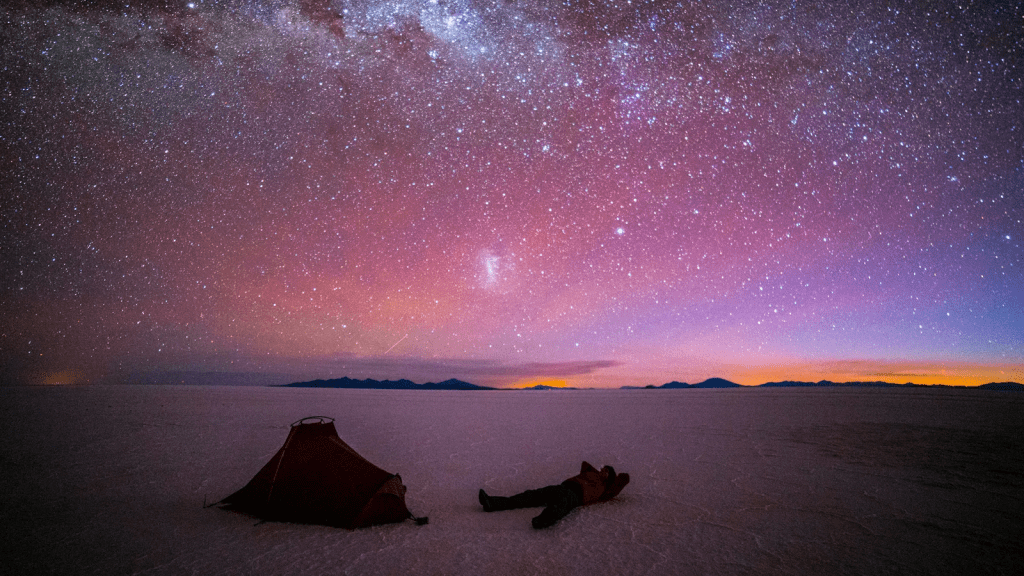
(Credit: Jordi Busqué)
I’ve been always fascinated by astronomy. As a child I spent a week each summer in my grandmother’s village, a tiny place called Peñarroyas in the province of Teruel, Spain, that had just four permanent inhabitants. The night skies there were unbelievable, with so many stars I couldn’t even make out the main constellations. It felt as impressive as jumping on a rocket and going to space.
A few years later, I took my first pictures of the centre of the Milky Way rising behind the hills that surround the village. I eventually became an astrophysicist, which makes the experience of being out there, under the stars, even more meaningful to me. Now, I travel the world as a documentary photographer and science communicator in search of the last places on Earth where you still can see truly dark, starry nights.

(Credit: Jordi Busqué)
From Morocco to Patagonia, these 11 photos reveal some of the world’s last dark-sky sanctuaries and offer a glimpse into the majesty that once enveloped humanity…
https://www.bbc.com/travel/article/20231123-the-last-places-on-earth-to-see-truly-dark-starry-nights
+++++++++++++++++++++++++++++++++++++++++++++++++++
Joe Moran: the story behind our planet’s most famous photo, December 24, 1968
In 1969 Michael Collins (1930-2021) Took This Photo of Every Single Human But Himself
Two Strangers Who Meet Five Times. By Marcus Markou
“Papa old-age home se bhaag gaye. Mrs Sharma ke saath”
 After the truth-shower