‘Authorities are behaving like the hilltop youth in the West Bank,’ says Jabr Abu Assa, one of the leaders of the campaign against the demolition of Wadi Khalil
Eden Solomon; May 24, 2024
At the entrance to the ruined community of Wadi Khalil there is a sign: “Our children deserve a home like every child in Israel does.” For two weeks, hundreds of children and adults of all ages from this unrecognized village, east of Be’er Sheva, have had no roofs over their heads. Authorities razed 350 structures in the community, 47 of which served as homes, this month: The three remaining are also slated for demolition.
Wadi Khalil lies in the path of the southernmost stretch of Route 6, but work on the highway has been suspended due to lack funds. This hasn’t prevented the state from harassing residents into leaving the area. The villagers have sworn not to leave their ancestral land until the state provides them with a decent alternative. So far, this hasn’t happened.
The destruction in Wadi Khali is total, with ruins of what used to be dwellings scattered everywhere. Camels, sheep and goats that were in pens before the May 8 demolitions now roam freely, some of them lost forever.
In the first days after the demolition work, which large numbers of police officers were brought in to guard, residents slept in the open. They later set up improvised tents. This week, the authorities returned “to break our spirits,” as one resident put it. Bulldozers smashed 20 tents and uprooted trees that provided shade in the blazing desert sun, as well as decades-old olive trees. They also destroyed chemical toilets the villagers had brought to the site. Furthermore, the Israel Land Authority placed warning signs instructing villagers to evacuate the area.
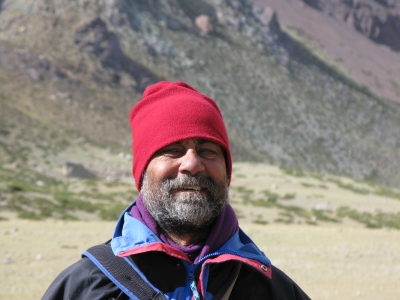
“The authorities are behaving like the hilltop youth in the West Bank,” said Jabr Abu Assa, a villager who is one of the leaders of the campaign against the demolition. “A few days after the demolition, we started erecting tents. When these were ready, most of the children and women returned after staying with relatives. But then came the bulldozers and knocked down the tents. They don’t even want us to have shade, they try to wreck everything. They want to expel us, but it won’t help.”
The villagers say that shortly before the bulldozers arrived this week, the authorities used drones in order to locate tents and trees. Some people managed to dismantle their tents before the bulldozers arrived, setting them up again before nightfall. “From now on, I’ll take it down every morning. You never know when they’ll come,” said Nasr Abu Assa, another villager.
Filling basic daily needs such as showering or going to the bathroom has become a huge challenge for the residents of Wadi Khalil. Each family has created a corner where they can do so. “We barely live. We bring water in jerricans from remaining faucets. The heat is killing the children and women. There are also some dangerous insects, with snakes soon appearing. We face a serious problem,” Jabr says. Another villager adds: “They’ve taken us 80 years back, destroying our houses and returning us to living in tents.”
Our conversation takes place in a protest tent the residents have set up, which now feels like a mourners’ tent. Some people sit there silently, talking little, staring at the ground. Before the demolition, people met in this tent to discuss steps to prevent it. Jabr, known for his smile and optimism, is disheartened. He is disappointed with the state, to say the least, finding it hard to believe that the state is so aggressive against its citizens. “My understanding is that we’ll remain in these tents for a long time, with no other solution. What’s happening here is terrible. But it won’t help, we’re staying,” he says.
What hurts Jabr most is what’s happening to the village’s young people. “They look at the state and say – it isn’t our country. We’re not in Gaza or the territories, we’re citizens with rights, but these are being denied.”
Najan Abu Assa, 24, whose tent was demolished this week, was separated from his wife and new baby. “Our baby was 2 weeks old when they demolished our house, so my wife went to live with her parents in Hura,” he says. “They didn’t compensate us and now I have to start from scratch. Where will I live? How will I build a house? We won’t let our young men serve in the army until they stop demolishing houses. There is no equality here. I feel that we’re being treated like the blacks were treated in America. I’m a second-class citizen,” he says.
Nasr, 50, served in the army for four years, first in the Givati Brigade and later in the Bedouin reconnaissance battalion. His family has lived in Wadi Khalil for generations. “We’re experiencing a true disaster,” he says in his tent, which he’s managed to save from the bulldozers. “We’re threatened with fines and our tents are destroyed on a daily basis. We don’t know what to do, we’re trying not to break.” He’s laid down mattresses and synthetic grass inside his tent, as well as a sofa. At one end, in a bag, are some books he managed to salvage from the ruins of his house. At the other end is a bag containing bread and canned tuna, for lunch.
Nasr has four children. He sent two daughters to live with relatives. Two others and a nephew are with him in the tent. “The kids can’t take it, especially the heat. We’re finding it very difficult. Going to the bathroom has become the hardest thing here. I use the bathrooms at nearby gas stations. They took away all our basic needs. We’re in a catastrophic state.”
He hopes that Diaspora Affairs Minister Amichai Chikli, who is now responsible for the Bedouin population, will come and talk to residents and see things up close. “If he comes and talks to us, we’ll find a solution. We’ll present him with all the facts and with our problems, since I believe the Land Authority and other intermediaries are misleading him,” says Nasr.
Otherwise, he can’t see this ending well for Wadi Khalil. “I believe I’ll be here without a tent in a month. They’ll collect all the debris and uproot the few remaining trees, doing all they can to remove us. This land is ours and we’ll fight to the death to keep it. Even if the police come and arrest us, we’ll stay. Until a solution is found, Route 6 won’t pass here.”
UN recognition of Palestinian Nakba counters the myth that Israel was created on empty land
Israel’s Colonial Revenge Genocide in Gaza is the latest in a Long History of such Massacres
Disappointed, disenchanted, defiant: inside the world of the West Bank’s angry armed youths
 After the truth-shower