NB: Over 90 percent of Indian workers are informal, contract labour, with no security or health care. All the economists who think capitalism is gods gift to humanity should spend some time studying ‘economics’ in India’s coal mines and brick kilns before writing their next op-ed. DS
Forced to travel far to find gruelling work making bricks, women and children fall sick but cannot access healthcare.
By Anumeha Yadav
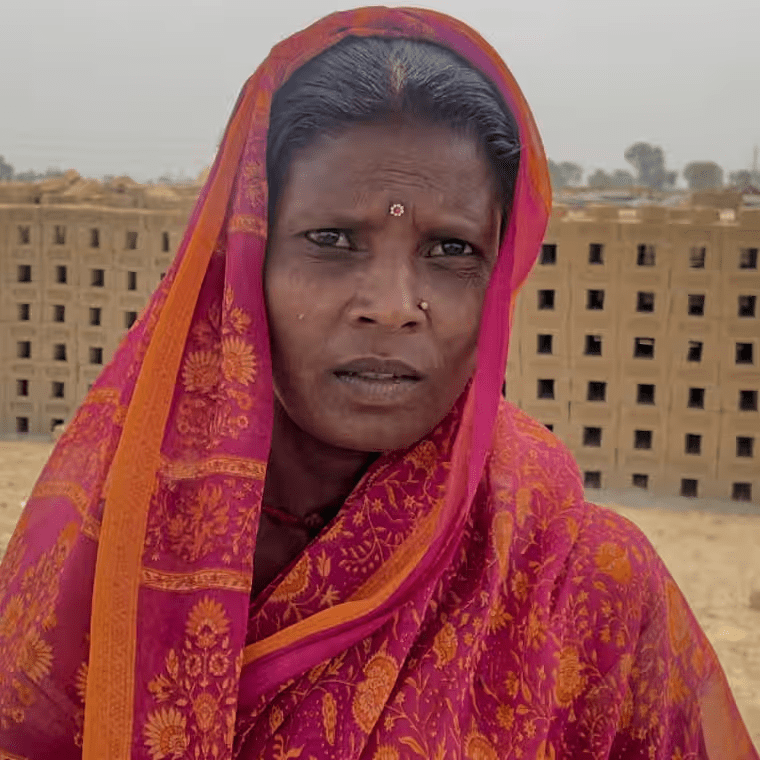
Suma Devi could not complete her treatment for TB as she had to move 500 miles from Bihar to get work to repay debt taken on last year. Photograph: Roli Srivastava
The phrase “khat rahein hain” (“being worn down”) is how Suma Devi describes her 16 years of labouring at the brick kilns near the city of Mathura in Uttar Pradesh, more than 500 miles from her own state of Bihar. Six years ago Devi had just given birth to her baby daughter when she was diagnosed with tuberculosis and put on a nine-month course of antibiotics. It is an effective way to treat TB but Devi had to abandon the course halfway through to find work at the Madhav brick kiln in Naujheel, far from her home in a village near the city of Gaya.
It has made the last few years the toughest of her 16 seasons working in kilns. “I don’t feel well. I have not got better in five to six years,” she says, coating clay in sand and moulding it into rectangular blocks on a wooden frame on a sweltering day.
Devi starts work at 8am, stopping at 1pm to avoid the worst of the heat. During her break she cooks for her husband and daughter and sweeps their temporary shelter, a brick hut. After sunset she goes back to work, hoping to make at least 2,000 bricks by 1am. They earn 500 rupees (£4.70) for making 1,000 bricks.
Devi belongs to the marginalised Dalits – the people at the bottom of India’s caste system, who were formerly known as “untouchables”. She says her family has no choice but to take this work….
++++++++++++++++++++++++++++++++++++
Democracy and workers’ movements – stories from Jamshedpur
1938: the year Indian workers fought for themselves
Unworkable: Swapping Palestinian workers with Indians
 After the truth-shower