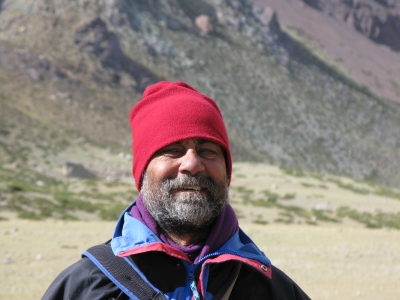
NB: An important thinker, Fr Pannikar combined compassion with thoughtfulness; and sought dialogue as a means of addressing the worlds problems. I empathise with him, and am sorry to note (for my part) the absence of divine compassion for the innocents of Gaza; not to mention the millions of innocents who suffered and died in the past century and continue to suffer today. I am unable to reconcile a belief in a benign God with the kind of evil that walks the world, often claiming divine legitimacy for cruel deeds.
Notwithstanding my own sense of resignation, I believe people like Fr Pannikar are needed, to awaken the consciences of those who are maddened by hatred and violence. It is a pity there are not more like him, and so few among the believers of all faiths who can stand up to tyranny. I am reminded of the Berrigan brothers, American Jesuits, who were jailed for their active opposition to the Vietnam war. Since people like them and Fr Pannikar held fast to their faith, I can only say: May God give strength to their souls, and to all those who do not confuse religion with an ideology. DS
Panikkar on Christianity, Asian religions, and the need for inter-religious dialogue. The crisis today is not that of one country, one model, one religion; it is a crisis of humanity. He gave this interview to Henri Tincq, religion editor of the Parisian daily Le Monde. The interview has been translated by Joseph Cunneen, founding editor of Cross Currents. His official site is available here.
*******************
How is it possible to combine a heritage that is both Christian and Hindu?
I was brought up in the Catholic religion by my Spanish mother, but I never stopped trying to be united with the tolerant and generous religion of my father and of my Hindu ancestors. This does not make me a cultural or religious “half-caste,” however. Christ was not half man and half God, but fully man and fully God. In the same way, I consider myself 100 percent Hindu and Indian, and 100 percent Catholic and Spanish. How is that possible? By living religion as an experience rather than as an ideology.
How do you explain the Western attraction to Asian religions and philosophies and the fear that this produces in Western churches?
One might well turn the question around and ask instead why the West exercises such an attraction on the East. The answer to your question, however, is that contemporary Christianity has given insufficient attention to many key elements of human life, such as contemplation, silence and the well-being of the body.
There is in this attraction a salutary slap by the Spirit, which is telling the churches in the West to wake up. The discovery of the other, the search for greater peace of mind and bodily calm, for joy and serenity, are sources of renewal. The whole history of Christianity is one of enrichment and renewal brought about by elements that came from outside itself. Do not Christmas and Easter, and almost all the Christian feasts, have a non-Christian origin? Would it have been possible to formulate the basic Christian doctrines without the hellenic tradition, itself pre-Christian? Doesn’t every living body exist in symbiosis with its external milieu?
Then why this fear? If the church wishes to live, it should not be afraid of assimilating elements that come from other religious traditions, whose existence it can today no longer ignore. Prudence, however, is a value that should be maintained; I certainly understand the voice of Catholic authority when it is raised against widespread superficiality.
Don’t most conflicts in contemporary society come precisely from the fear of a destruction of identity, a fear that has led to all those forms of religious withdrawal called integralism?
Someone who is afraid of losing his or her identity has already lost it. In the West identity is established through difference. Catholics find their identity in not being Protestant or Hindu or Buddhist. But other cultures have another way of thinking about one’s identity. Identity is not based on the degree to which one is different from others.
In the Abrahamic traditions (Judaism, Islam, Christianity), people seek God in difference — in superiority or transcendence. Being divine means not being human. For Hindus, however, the divine mystery is in man, in what is so profound and real in him that he cannot be separated from it, and it cannot be discharged into transcendence. This is the domain of immanence, of that spiritual archetype that is called brahman. In the Hindu system, people are not afraid of losing their identity. They can be afraid of losing what they have, but not of losing what they are.
Being afraid is always a bad sign. Christ says, “I give you peace” and “Do not be afraid.” Contemporary Christians feel surrounded and are afraid of being dissolved. But what does the gospel say? “You are the salt of the earth.” The salt has to be dissolved in order for the food to be more tasty. The leaven is there to make the bread rise. The Christian vocation is to lose oneself in others. From an institutional or disciplinary point of view, I can understand today’s reactions of prudence in the churches. But the duty of the Christian is to be dissolved, to “lose one’s life” in order to communicate it to others. The Christian faith even tells us that by losing our life we gain it. It is here that we find the meaning of the resurrection.
You believe in interreligious dialogue. On what conditions can it succeed?
The days are over when religions could take refuge in splendid isolation. In Europe, for example, religious people can no longer ignore the existence of the millions of foreigners with different cultures who are now living there. They can no longer ignore the fact that, across three quarters of our planet, the dominant religion is not Christianity. Hence there must be dialogue; the question is, what kind?…
https://www.religion-online.org/article/eruption-of-truth-an-interview-with-raimon-panikkar/
Raised in Spain by a Catholic mother and a Hindu father, Raimon Panikkar has made inter-religious dialogue his life’s work. He was ordained a Roman Catholic priest in 1946, and is attached to the diocese of Varanasi in India. Panikkar is the author of some 40 books. This article appeared in The Christian Century, August 16-23, 2000, pp. 834-836. Copyright by The Christian Century Foundation; used by permission. Current articles and subscription information can be found at www.christiancentury.org. This material was prepared for Religion Online by Ted and Winnie Brock.
++++++++++++++++++++++++++++++++++++++++++
Gandhi’s Oceanic Circle. October 2, 2024
Thanks to Gaza, European philosophy has been exposed as ethically bankrupt
Neo-Zionism, political theology and the Land Traditions of the Bible (1967 to Gaza 2009)
Michael Brenner: Europe-Jews-Muslims
Pankaj Mishra: The Shoah after Gaza
Sicilian fishermen risk prison to rescue migrants: ‘No human would turn away’
The Nobel Peace Prize For Espionage. Remembering Carl von Ossietzky
Nobel Peace Laureate: ‘We journalists are the defence line between dictatorship and war’ (2021)
 After the truth-shower