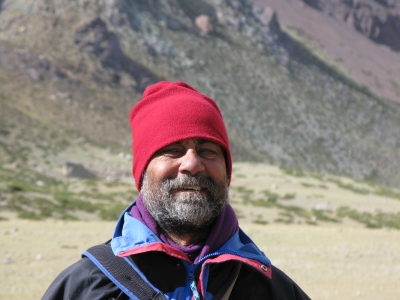
He was arrested by the authorities on January 28, 2020 after being accused of inciting communal violence through speeches made by him in December 2019 and January 2020 at peaceful protests opposing the Citizen Amendment Act (CAA).
Sharjeel Imam, the Muslim student leader, spent well over four years in prison before he could even get a bail. It was on May 29, 2024 that the Delhi High Court granted him bail in the case but additional charges against him prevented him from being released from prison.
Imam was accused of orchestrating the February 2020 Northeast Delhi riots which claimed at least 53 lives, mostly Muslims who were part of the anti-CAA protests. Soon after his arrest, Sharjeel Imam was slapped with the draconian, The Unlawful Activities (Prevention) Act or UAPA.
Ironically, Sharjeel Imam, along with other students, human rights activists and politicians was arrested one month before violence rocked northeast Delhi. The Guardian had called the Delhi riots as the “worst religious conflict to engulf the capital in decades,” but hastened to note that “questions have persisted about the role that the Delhi police played in enabling the violence, which was predominately Hindu mobs attacking Muslims…”
The catalyst for the riots, according to The Guardian, is widely acknowledged to have been a comment by Kapil Mishra, a BJP leader, who on February 23 issued a public ultimatum declaring that if the police did not clear the streets of a protest against the new citizenship law seen as anti-Muslim, his supporters would be “forced to hit the streets”.
UN experts have said that Imam’s incarceration seems “clearly designed to send a chilling message…that criticism of government policies will not be tolerated.”
Imam’s thoughts in the form of a letter
In a letter written from prison 1.5 years ago, Imam dwelt at length about his years in prison, concerns about his family, community, country and the books he has been reading inside the prison. Speaking of his arrest, Imam wrote that though he had anticipated being imprisoned on “trumped-up charges” due to his involvement in the Shaheen Bagh protests, he did not expect to be accused of “terrorism,” especially for the riots that occurred a month after his arrest.
“This speaks to the lengths the current regime will go to to suppress dissent and keep people like me behind bars,” he wrote. In the letter, published by Maktoob Media, Imam stated that his only real anguish during the “prolonged and unnecessary incarceration” is the thought of his ageing and ailing mother.
“My father passed away nine years ago, and since then, it has just been me and my younger brother to support her…as the years drag on, I do worry about my mother, my brother, and the world outside. I wonder if my presence could have made any difference, or if I have missed something that can never be recovered,” he wrote.
Setting aside the worries, Imam said that he has been trying to find solace in prayer and books. “I think of Ali Shariati, the Iranian revolutionary, who spent two years in prison and was under house arrest before his death. From him, I learned this powerful dua: “O God, grant me strength to change what I can change, and accept what I cannot.” It is with this prayer that I try to work on myself,” the letter read.
“Apart from this, I submit to God’s will and spend my time reading as much as I can. As long as I have meaningful and interesting books, I find solace, and the world outside doesn’t affect me much,” Imam wrote. Imam spoke satisfyingly on how he could dedicate his time in prison to reading everything from Fyodor Dostoyevsky’s fiction to Hao Wang’s “From Mathematics to Philosophy.” He detailed his extensive readings by listing it as five categories covering a wide range of topics including history, Islam, religious mysticism, German literature, science, and philosophy.
“I have been able to read in 3-5 years, which would have taken me at least double that time if I had been outside,” he wrote. Imam, who was a PhD scholar at Jawaharlal Nehru University (JNU) at the time of his arrest mentions his thesis titled “Communal Riots and Cow Slaughter in Early 20th Century Colonial India” and how he had to discontinue his research works due to lack of resources in the jail.
“…the amount of primary data that I have collected runs into tens of thousands of pages and it is not possible to look through that sort of data while sitting in jail, especially since most of this data is spread across various devices in digital format — devices which the police seized although they provided us with clones eventually. Hence, I limit myself to reading whatever secondary works I can get access to,” he wrote.
Further speaking on his thesis, Imam explored the political question of Muslims in India, connecting it to partition, in the context of cow-related violence that happened in the 1920s. “My work seeks to deepen the discourse on Partition and challenge the simplistic narratives of Muslim separatism and elite competition theory promoted by some scholars,” he wrote.
Imam also spoke about the anti-CAA protests in Shaheen Bagh and its socio-political relevance in today’s India. “Shaheen Bagh stands as a milestone in Indian history—a peaceful sit-in protest on a major highway, led first by students and later sustained by women for nearly three months, interrupted only by the pandemic-induced lockdown,” he wrote.
He also alleged that during the initial days of the sit-in protests, Shaheen Bagh had experienced several challenges including attempts by “rogue elements, likely operating under police instructions,” who sought to “disrupt the peaceful demonstration from the very first night, attempting to incite violence and derail the movement.”
“I hope Shaheen Bagh conveys a simple yet powerful truth: resistance to authoritarian regimes is not only possible but can also be achieved peacefully through the collective action of the masses. History shows that in times of crisis, people overcome their internal contradictions for the greater good,” he wrote. He also dismissed narratives that sought to establish Shaheen Bagh as a spontaneous, leaderless movement and expressed hope that it “represents a possibility of Muslims becoming equal citizens.”
In the letter, Imam has extensively used poetry to communicate his emotions and reflect on his circumstances. While speaking of his mundane daily routine in prison, Imam quotes Hasrat Mohani: “hai mashq-e-sukhan jaari, chakki ki mashaggat bhi / Ik turfa tmaasha hai Hasrat ki tabhiyat bhi” (“The exercise of speech continues, the grind of the mill is the same, both are one-sided spectacles in Hasrat’s temperament”).”
To describe his loneliness in the small cell, where he is lodged alone, Imam quotes Hafiz Shirazi: “Hafiza, dar kunj-e-fagr o khalwat-e-shab ha-e-taar, Ta buwad virdat dua / O dars-e-Qur’an gham makhur” (“O Hafiz, in the corner of poverty and the solitude of the night, let the prayer and the study of the Quran be your solace; do not mourn”).
Imam ended his letter with a couplet from Faiz Ahmed Faiz which goes:
“Halqa kiye baithe raho is Shamma ke yaron
Kuchh raushni baaqi to hai, har chand ke kam hai”
(“Stay gathered around the lamp friends, for some light still remains even if very faint.”)
++++++++++++++++++++++++++++++++++++++++++
A LEGACY THAT IS BEST FORGOTTEN
Four years and counting, Umar Khalid languishes in jail without bail or trial
Rahul Pandita: What I learned from G. N. Saibaba
The sinking of Joshimath and the commercialisation of sacredness
Demolition Order for Activist Afreen Fatima’s House, Family Told to Vacate Premises
 After the truth-shower