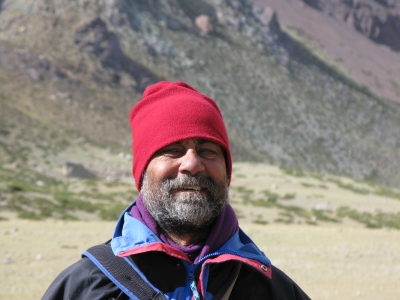
Inspired by Che Guevara, Jean Ziegler has spent the past 60 years exposing how Switzerland enabled global wrongdoing. His enemies accuse him of treason
Ziegler would use the term “secondary imperialism” to define his country’s modus operandi. This was not the first-order French, British or, later, American imperialism… It was a more discreet kind of influence that intervened in its wake: a cabal of multinational firms and financiers who kept poor countries dependent on western (mostly American) goods, guns and money. The Swiss enabled these practices by offering access to favourable regulations and financing…. it was, in a sense, the mercenary trade by another name… His book Switzerland: The Awful Truth, was published in 1976. Ziegler’s thesis, which he stands by to this day, is that Switzerland’s role in the world is that of accomplice – handmaiden, of sorts – to capitalism.
In early 1964, Jean Ziegler, a young Swiss politician, received a phone call from a man claiming to represent Ernesto “Che” Guevara, the Cuban revolutionary and minister of industry. Che would be in Geneva in March for a UN conference on trade policy, and some comrades had suggested Jean might be his chauffeur during his stay. Was Ziegler available for the gig?
Today, in his tenth decade of life, Ziegler is Switzerland’s most notorious public intellectual. That’s because, over the course of writing about 30 books, serving for close to three decades in the Swiss parliament, and relentlessly crusading for leftwing causes in his free time, Ziegler has made a career of unsparing criticism of his home country and its outsize influence on the rest of the world. In the 1960s, though, he was just another eager young leftist, waiting for his chance to change the world.
Ziegler, like Che, was born into a family of upper-middle-class professionals. And, like Che’s, his travels around the world had radicalised him against what he perceived to be a capitalist, imperialist and racist system. Everywhere he went, he saw its ravages: in the Belgian Congo, whose hungry children haunted him long after he went home; in Algeria’s bloody wars of independence against the colonial French; and in annexed Cyprus, where the British had deprived citizens of their right to self-determination for decades.
Ziegler heard the echoes of oppression closer to home, too, in the deracinated commodity exchanges through which speculators bet on the price of food and fuel; and in the bank vaults mere steps from his home, where kleptocrats siphoned away their countries’ natural resources.
For centuries, the Swiss had prided themselves on keeping blood and money apart: of keeping its bank vaults isolated from the upheavals of the outside world. In Ziegler, they spawned an iconoclastic figure who forced them to reckon with the moral cost.
“Blood may not run down the walls of the UBS headquarters,” he told me one afternoon in June 2021. “But it’s as if it did: the relative wellbeing of Swiss people is financed by death, fear and famine. This is Ali Baba’s cave: the world’s haven. That’s unique to Switzerland.”
I always had a hunch that there was something strange about the place where I grew up, the Swiss city of Geneva, though its location doesn’t tell the whole story. Geneva hosts the United Nations, the World Health Organization and hundreds more international organisations and NGOs, which employ thousands of diplomats, consuls, expatriate workers and their families. There are more multinational companies there than I can count. Nearly half of Geneva’s population has a non-Swiss nationality. Without outsiders, the city would be nothing.
I am, and will always be, a part of this world apart – a place defined by a certain placelessness. I went to international schools, where the history we were taught had little to do with the battles that had been fought steps from the playground. My parents’ jobs at the UN – my father was an economist at the organisation’s Conference on Trade and Development, and my mother, a conference interpreter for its secretariat – compounded the feeling of being a little elsewhere. My classmates seemed to move every few years, which made it feel like I was always moving, too, without my ever actually leaving.
But there was another, less obvious reason for my unease with Geneva. It had to do with the rules: who made them, who followed them, and the places and people to whom they didn’t apply. So much of Geneva’s wealth comes from that spectral economy it plays ghostly host to, swaddled in security, neutrality, secrecy laws and tax exemptions.
The canton of Geneva has only about half a million residents, with barely 200,000 living in the city proper, but more than one-third of the world’s grain is traded from desks here. More than half the bags of coffee in the world pass “through” Switzerland, most of them via firms in and around Geneva, in much the same fashion. The country didn’t get its first Starbucks until 2001; a few months later, the company began purchasing its coffee through a Swiss affiliate.
Geneva has long been a hub for oil – if you can call it a hub when the barrels never actually turn up there. Until a few years ago, between 50% and 60% of Russian crude was traded from Switzerland, mostly Geneva, according to the research nonprofit Public Eye. When the Swiss parliament reluctantly voted to join the EU’s sanctions regime against Russia after Vladimir Putin’s invasion of Ukraine, some of that business decamped to Dubai.
Switzerland is landlocked. That is no impediment to its being home to some of the biggest shipping companies in the world, which charter and manage vessels from Geneva while shrouding their beneficial (de facto) owners in layers of corporate secrecy. This way of positioning itself in the world is Geneva’s greatest contribution to the way we all live now: in an age of exceptions, in which the where and when don’t matter as much as who, how much and why. It’s a world where wealth travels in abstract form: numbers on a screen, trades on a terminal. It’s a world in which borders are drawn not just around places but also around people and things.
Ziegler saw this early and exposed it often, risking his livelihood (and certainly his popularity with his compatriots) relentlessly.
I met Ziegler at his home in the small village of Russin, a few miles outside Geneva. He was wearing grey sweatpants and a stained white shirt when he greeted me at the door, and offered me whisky, more whisky and wine before conceding to pour me a glass of water while I waited on an upholstered yellow couch by the terrace door. The house was spacious and unfussy. It hung over a steep vineyard with a view of the lake. Every surface in the living room was piled with books, potted flowers or photographs of his family. “I hope you don’t mind that I’m barefoot,” he said. “I took a tumble recently,” he added, pointing to his bandaged forehead, “and it’s more comfortable this way.”
Ziegler began his political life as a conservative; he was an active member of a student group formed in 1819 to promote Swiss national unity. He moved to Berne to read law, and then studied sociology in Paris at the Sorbonne in the mid-1950s. Between lectures, Ziegler befriended Jean-Paul Sartre and Simone de Beauvoir, and over the course of smoke-filled, wine-drenched evenings in Sartre’s mother’s flat the couple turned him on to Marxism and encouraged him to report on the Algerian war for their magazine, Les Temps Modernes.
De Beauvoir took it upon herself to edit Ziegler’s awkward Swiss-German-French into more polished and literary prose. She also urged him to ditch his given name, Hans, and become Jean, which she judged a more dignified byline. It was Jean that Ziegler went by when he joined the French Communist party, and as Jean that he was expelled over his support for Algerian independence. But it was as Hans that he provided material support to the causes he loved: carrying suitcases of cash over the French-Swiss border for the Front de Libération National to deposit in Geneva, and “losing” his passport (with the aim of lending it to a comrade) a few too many times to pass himself off as innocently absent-minded.
In 1961, Ziegler responded to a classified ad seeking French speakers to accompany a British civil servant on a mission to what is today the Democratic Republic of the Congo. The country had just become independent, but a coup backed by Belgium (which wanted to keep mining concessions) and the United States (which wanted to squash communism) deposed the elected president, Patrice Lumumba, and installed Mobutu Sese Seko in his stead. Mobutu was your archetypal kleptocrat: a ruthless, fiercely anti-communist megalomaniac hellbent on enriching himself and his cronies while the Congolese people suffered. He nationalised industry but put the country’s resources in the hands of friends and family, leaving ordinary citizens little to show for their country’s vast mineral wealth….
+++++++++++++++++++++++++++++++++++++++++++++++++
Victor Jara murder: ex-military officers sentenced in Chile for 1973 deathMore Evidence Regarding Henry Kissinger’s Lies About Chile
Files reveal Nixon’s role in plot to block Allende from Chilean presidency
The joint CIA – MI-6 instigated coup in Iran that changed the Middle East, and the cover-up
Eve Ottenberg: Abolish the CIA
The CIA’s Intervention in Afghanistan: Interview with Zbigniew Brzezinski, Paris, 15-21 January 1998
The US invaded the island of Grenada 40 years ago. The legacy of revolution lives on
 After the truth-shower