
Hagia Sophia was built as a church over a Roman temple, and was subsequently converted into a mosque and then a museum. Since 2020 it is used as a mosque once more
By Ali Halit Diker, CNN
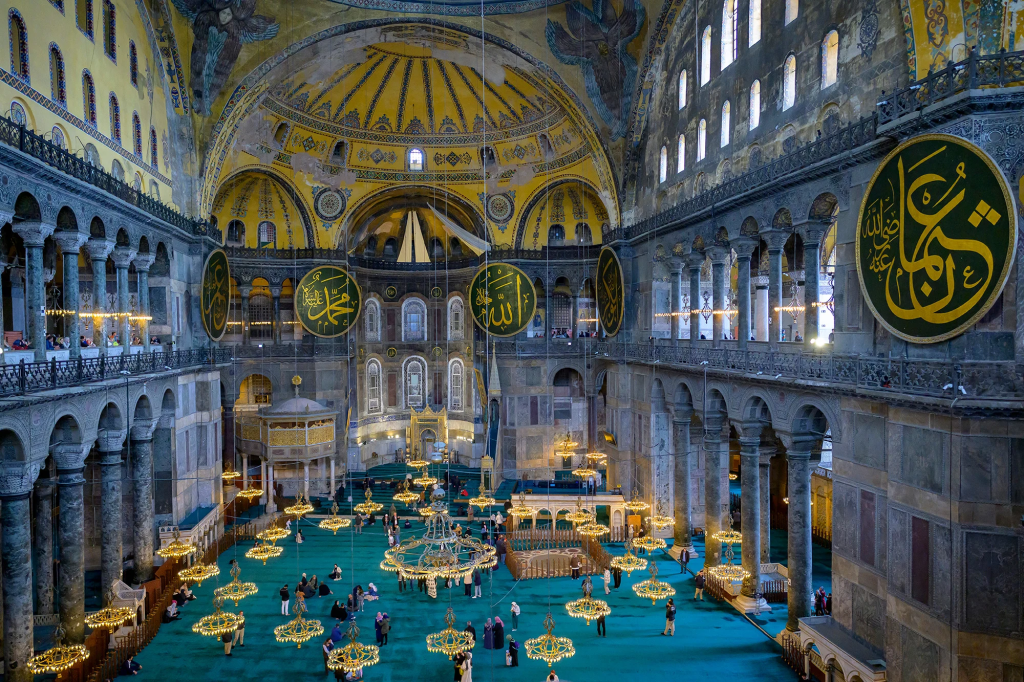
Whether you’re a believer or not, visiting Hagia Sophia is a spiritual experience. The architectural genius of this place of worship — which was built as a church in 537CE before its conversion into a mosque in 1453 — creates an illusion of vastness. It feels like the space starts to expand when you enter the building. Acoustic alchemy transforms visitors’ murmurs into shimmering sounds, suspended weightless in the air, like echoes of a prayer in an ancient language.
Yasin Akgul/AFP/Getty Images
The art inside the building is a testament to coexistence. There is no other place on Earth where Christian mosaics of saints and Byzantine rulers are juxtaposed with Islamic calligraphy, also known as Hüsn-i Hat — large roundels displaying the names of Allah (God), the prophet Mohammed and the four caliphs, the leaders of Islam following the death of Mohammed.
Today, Hagia Sophia is one of the world’s most extraordinary mosques — but it’s more than that. It’s also a symbol, a cultural phenomenon, and a monument. Naturally, like most monumental structures, Hagia Sophia has its own mythology. Of the many stories about the building, some are true, some are exaggerations, and some are outright fantasies.
Bigger and better
The current Hagia Sophia was built in the 6th century when Constantinople — as Istanbul was then called — was the heart of the Orthodox Christian Byzantine Empire that emerged as Ancient Rome’s domination dwindled and ruled swathes of Europe and northern Africa, as far away as modern-day Spain, Libya, Egypt, and Turkey, until the city fell to the Ottomans in 1453….
https://edition.cnn.com/travel/hagia-sophia-istanbul-hidden-history/index.html
+++++++++++++++++++++++++++++++++++++++++++
 After the truth-shower