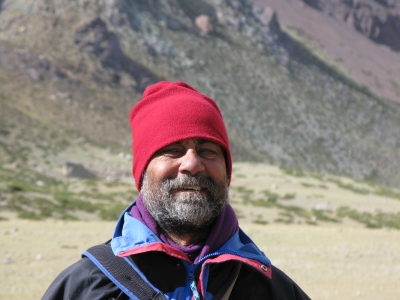
Historian Rashid Khalidi, author of The Hundred Years’ War on Palestine, joins host Chris Hedges to detail the dwindling academic freedom in American universities and society at large as Donald Trump’s grip on free speech tightens.
Khalidi notes that while the conflation of anti-Zionism with antisemitism is an old tactic to stifle academic scrutiny of Israel, its current deployment is unprecedented. Today, professors are intimidated out of teaching about Israel and Palestine, entire Middle Eastern studies departments are threatened with receivership and federal funding is withheld from universities.
“I know many people who are not going to teach courses this semester of my colleagues out of fear that if I teach about settler colonialism, if I teach about genocide, if I teach this or that about the Middle East, I’m going to be hauled up before these kangaroo courts,” Khalidi tells Hedges.
“That means your life is going to be ruined. You’re going to have to get lawyers, have to deal with a process that is completely opaque and which is designed… to punish and discipline anybody who opens their mouth on Palestine.”
*** Transcript:
Chris Hedges
One hundred and sixty students, professors and staff at the University of California, Berkeley, received a letter earlier this month from the university’s chief counsel, David Robinson. The letter informed them that files containing their names had been forwarded to the Department of Education’s Office for Civil Rights in response to its investigation of antisemitism on college and university campuses.
The decision, which violated protections offered by the 6th and 14th Amendments of the Constitution — the right to a lawyer, the right to an impartial jury, and the right to know who your accusers are and the nature of the charges and evidence against a person charged with wrongdoing — are part of a nationwide campaign to criminalize free speech by weaponizing antisemitism and, following the assassination of Charlie Kirk, any criticism of the far right and the Trump administration, including Trump himself.
The historian Rashid Khalidi, in a letter to the president of Columbia University, said that the restrictions on free speech at the university made it impossible for him to teach his fall course on modern Middle East history.
Columbia, along with many universities and state governments, has adopted the International Holocaust Remembrance Alliance (IHRA) definition of antisemitism. The IHRA definition, in the words of Khalidi, “deliberately, mendaciously and disingenuously conflates Jewishness with Israel, so that any criticism of Israel, or indeed description of Israeli policies, becomes a criticism of Jews.”
“It is impossible,” he goes on, “with any honesty to teach about topics such as the history of the creation of Israel, and the ongoing Palestinian Nakba, culminating in the genocide being perpetrated by Israel in Gaza with the connivance and support of the US and much of western Europe.”
Columbia has stripped itself of academic integrity in a desperate effort to placate the Trump administration. It shut down the university’s encampments, permitted police on its campus to arrest over 100 students, acquiesced to appointing a Trump-approved monitor to review Columbia’s admissions records to enforce a supreme court ban on affirmative action, ensuring that the university does not admit too many non-white students.
The university also agreed to place its Middle Eastern, South Asian, and African Studies Department under “academic receivership,” stripping these departments of academic independence.
The criminalization of free speech, fatal to honest intellectual inquiry, is a plague that is destroying our universities and our wider society. Joining me to discuss this assault by the Trump administration and the acquiescence by leading institutions, including academic and the media, is Rashid Khalidi, the Edward Said Professor Emeritus of Modern Arab Studies at Columbia University and the author of numerous books including The Hundred Years’ War on Palestine, Palestinian Identity: The Construction of Modern National Consciousness and The Iron Cage: The Story of the Palestinian Struggle for Statehood.
Let’s talk about what they’ve done because I probably have not spent anywhere near the time in the confines of academia that you have but I did spend eight years — four as an undergrad and four in graduate school — and I’m just devastated. It’s easy to destroy, it’s very hard to rebuild.
Let’s talk about what these universities have done to themselves in terms of their own academic integrity and their fostering of intellectual life.
Rashid Khalidi
Well, I would argue that they’ve self-mutilated. In some cases, even before the Trump administration asked them to do that. Harvard, for example, fired the two people who ran their Middle East center, terminated a program with Birzeit University in the West Bank, and shut down a program at the Divinity School in the process of negotiating with the Trump administration over their demands on the university.
So we have had in many places what I would call anticipatory obedience, expecting something to come down and taking advantage of it, in some cases, to do things that powerful forces within the universities wanted to do anyway.
In the case of Harvard, you have people like Larry Summers, former secretary of the treasury, Bill Ackman, a big donor and alumnus, putting pressure on Columbia for months and months and months to crack down on student activism.
Chris Hedges
Is this Columbia or Harvard?
Rashid Khalidi
This is Harvard. We had the same kind of process going on here at Columbia. The president, the then president, we’ve cycled through three, four actually, in the last two and a half years. The then president appointed an antisemitism task force with three co-chairs expressly chosen for their absolute ignorance of the scholarship on antisemitism.
One was a tax lawyer, one was an urban studies specialist, one was a professor of journalism. Columbia has a very large number of experts on the Holocaust, genocide, antisemitism on its faculty, and those were expressly excluded from running this so-called task force, which produced a recommendation that Colombia adopt the International Holocaust Remembrance Alliance’s definition that you mentioned in the intro, which essentially was created to prevent criticism of Israel.
It wasn’t really intended to deal with the overwhelming majority of antisemitism today, which comes from the political right and has always come from the political right. The Nazis were not leftists. The Ku Klux Klan are not leftists. The people who marched through Charlottesville, Virginia, the University of Virginia campus town nearby, chanting “Jews will not replace us,” were not leftists.
So real antisemitism, most of it, is on the right. And such as there is on the left is largely distinct, or entirely in many cases distinct, from criticism of the policies of Israel, which is carrying out a genocidal series of massacres, ethnic cleansing and war crimes in the Gaza Strip, and against which majorities of Americans are now arrayed.
But in the eyes of the Trump administration, in the eyes of the people who produced this antisemitism task force report, part one, these protests are or were, “antisemitic.” So Colombia, again, even before the Trump administration insisted that it adopt this, had appointed a task force which recommended the same thing.
So we have been going down this path even before in March the Trump administration issued a set of demands which Colombia almost immediately accepted….
+++++++++++++++++++++++++++++++++++++++++++++++++
Rashid Khalidi: ‘Israel Has Created a Nightmare Scenario for Itself. The Clock Is Ticking’
The Hundred Years’ War on Palestine (PDF)
Gaza and the End of Western Fantasy
Arab Failures: The Unspoken Complicity in Israel’s Genocide
Chris Hedges: The Gaza Riviera
Israeli airstrike kills nine of Gaza doctor’s 10 children
William Dalrymple’s speech on how colonialism led to the genocide in Gaza
Albert Einstein on Jews in Palestine (1932-49)
 After the truth-shower