
A Farewell to Arms
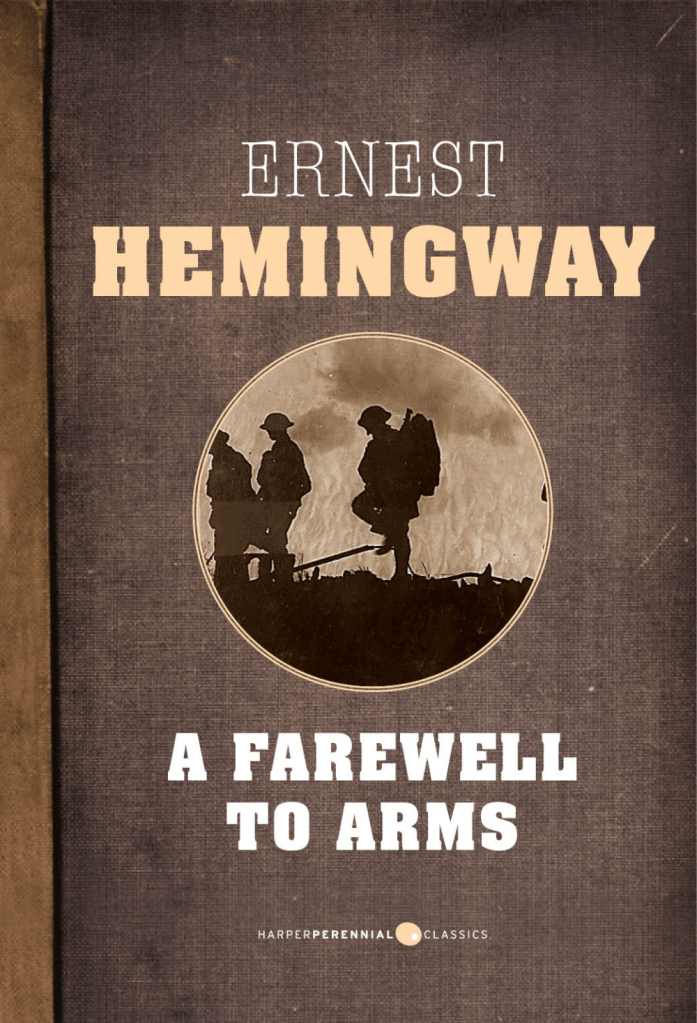
A story of love and pain, loyalty and desertion, this classic edition of A Farewell to Arms is the unforgettable tale of an American ambulance driver on the Italian front and his passion for a beautiful English nurse set against the backdrop of World War I.Written when Ernest Hemingway was thirty years old and lauded as the best American novel to emerge from World War I, A Farewell to Arms is the unforgettable story of an American ambulance driver on the Italian front and his passion for a beautiful English nurse—a love with an intensity unrivaled in modern literature. Set against the looming horrors of the battlefield—weary, demoralized men marching in the rain during the German attack on Caporetto; the profound struggle between loyalty and desertion—this gripping, semiautobiographical work captures the harsh realities of war and the pain of lovers caught in its inexorable sweep.
**************
The Good Soldier Svejk
+++++++++++
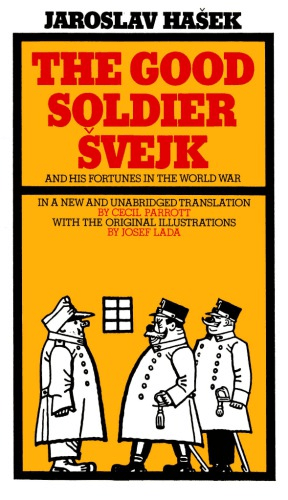
The Bad Bohemian. The Extraordinary Life of Jaroslav Hašek author of The Good Soldier Švejk
The real-life creator of the anarchist classic The Good Soldier Švejk was the extremely Bad Bohemian Jaroslav Hašek. His life was, frankly, a disgrace. The son of an alcoholic Czech schoolmaster, Hašek made a bad start and got steadily worse. After spending much of his dissolute youth as a tramp, Hašek joined an anarchist group and destroyed even their crumpled faith in humanity by bartering the office bicycle for drink. He created chaos as editor of the respected magazine Animal World by inventing new animals and advertising for sale a pair of thoroughbred werewolves. He founded a spurious political party of the soft centre, and was saved from suicide by a theatrical hairdresser. After taking to drink he became a cabaret star, propagandist and bigamist. Hašek’s bottle-strewn life was the raw material of his fiction; his remarkable biography makes riotous reading.
+++++++++++++
Storm of Steel
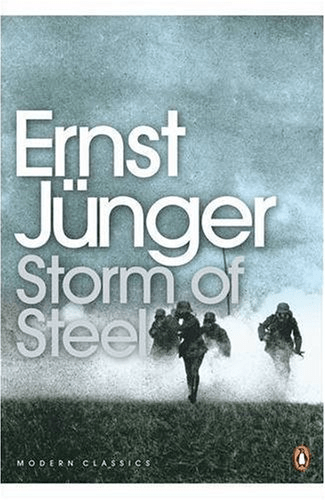
‘As though walking through a deep dream, I saw steel helmets approaching through the craters. They seemed to sprout from the fire-harrowed soil like some iron harvest’. “Storm of Steel” is one of the greatest works to emerge from the catastrophe of the First World War. A memoir of astonishing power, savagery and ashen lyricism, it illuminates like no other book the horrors but also the fascination of total war, presenting the conflict through the eyes of an ordinary German soldier. As an account of the terrors of the Western Front and of the sickening allure that made men keep fighting on for four long years, “Storm of Steel” has no equal.
******************
All Quiet on the Western Front
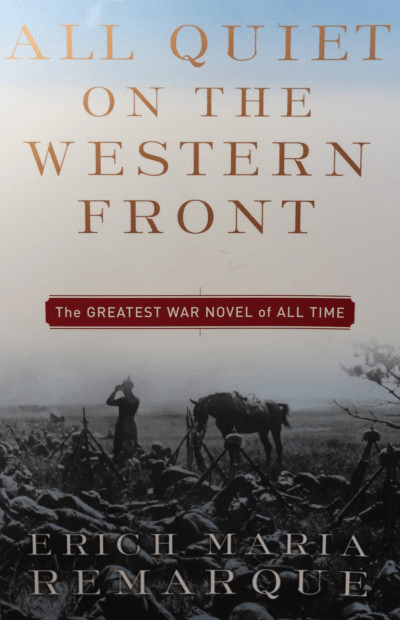
Paul Baumer enlisted with his classmates in the German army of World War I. Youthful, enthusiastic, they become soldiers. But despite what they have learned, they break into pieces under the first bombardment in the trenches. And as horrible war plods on year after year, Paul holds fast to a single vow: to fight against the principles of hate that meaninglessly pits young men of the same generation but different uniforms against each other — if only he can come out of the war alive.
‘There are some books that should be read by every generation. The latest translation and republication of Remarque’s story of German trench soldiers of the 1914-18 war gains even more authority in the context of the loss of life in wars that still rage..’
‘The book conquers without persuading, it shakes you without exaggerating, a perfect work of art and at the same time truth that cannot be doubted’ : Stefan Sweig
****************
The Soldiers’ Christmas Truce 1914 / Armistice Day, November 11, 1918: In Pictures Professor Fritz Fischer (1908 – 1999)
1918-1921: The Italian factory occupations and Biennio Rosso (Two Red Years)
Book review: The Coolie’s Great War: Indian Labour in a Global Conflict, 1914-1921
Amarjit Chandan: The Great War & its Impact on Punjabis
They Shall Not Grow Old – Peter Jackson’s electrifying journey into the trenches of the Great War
 After the truth-shower