
NB: Our RSS/BJP rulers, who trumpet their greatness to the whole world, who have given us a VishwaGuru leader; do not want us to hear the last voice of a six year old Palestinian girl, pleading for help, murdered by a genocidal regime to which they have now come to owe allegiance. By so doing, they censor not just a voice of an innocent, they wipe out the very idea of human empathy and kindness. Shame on you, everlasting shame.
I weep for you, little one, may you be at peace in heaven. DS
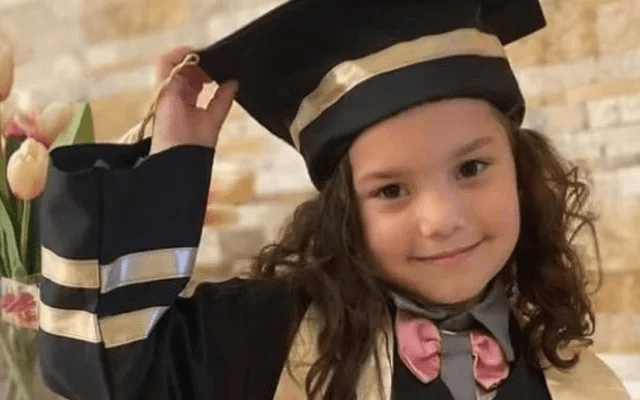
Six-year-old Palestinian girl Hind Rajab was killed along with five relatives and two medics sent to rescue her during an Israeli tank attack in Gaza City on January 29, 2024. (Photo: family photo)
While Israel may never have concerned itself with film certification in India, Indian authorities showing their willing to censor films in the interest of a foreign nation may change the expectation.
New Delhi: More than 90 filmmakers, journalists, academics and activists from India, Israel and elsewhere have issued a statement condemning the Central Board of Film Certification’s ban on the Oscar-winning documentary The Voice of Hind Rajab in India. This ban, they argue, “continues a worrying pattern of Indian censorship of Palestinian and progressive Israeli voice”.
Signatories include actors Naseeruddin Shah and Ratna Pathak Shah, filmmakers Michal Aviad, Payal Kapadia, Ilan Ziv and Anant Patwardhan, and academics Akeel Bilgrami, Lynne Segal and J.P. Loo.
Banning The Voice of Hind Rajab threatens freedom of expression in India and Israel.
We are, variously, Israelis, Indians, filmmakers, journalists, academics and activists. We write in support of pluralism, democracy and freedom of expression in India and in Israel—for both Jews and Palestinians. And we condemn the Central Board of Film Certification’s invocation of Indo-Israeli relations to justify its banning of The Voice of Hind Rajab.
The ban continues a worrying pattern of Indian censorship of Palestinian and progressive Israeli voices. In January, Einat Weizman and an Israeli theatre troupe were denied visas for the International Theatre Festival of Kerala. And in December last year, the Union government censored pro-Palestinian films at the International Film Festival of Kerala, including All that’s left of you and Once upon a time in Gaza. We wish to make three points about the implications of the ban for freedom of expression, not only in India but also in Israel.
First, the ban is a plainly unlawful attack on freedom of expression, protected by Article 19 of the Constitution of India. In Ramlila Maidan incident, the Supreme Court held that freedom of speech can be restricted only under Article 19(2): such restrictions must be ‘reasonable’, i.e. ‘free of arbitrariness,…have a direct nexus to the object, and…be proportionate to the right restricted as well as the requirement of the society’. The Board’s reasoning that certification might ‘break up’ Indo–Israeli relations fails all three tests. It is arbitrary: the Board felt no need to ban e.g. 120 Bahadur or The Bengal Files, even though they were at least as likely to damage foreign relations. It has no ‘direct nexus’ to a relationship principally based on economic, defence and strategic ties. And it is difficult to see how denial of certification of films could be a proportionate means to any foreign policy ‘requirement of…society’ that it could plausibly achieve.
Second, self-censorship is a vicious cycle. It encourages others to expect similar self-censorship in future. Israel would likely not even have thought to concern itself with film certification in India before these incidents. Now the Indian authorities have shown themselves willing to censor films in foreign powers’ interests. Although most self-censorship is individual, the same logic of anticipatory obedience applies to state–state interactions. Conversely, both states and individuals that display a principled commitment to freedom of expression ultimately protect their own interests at the same time. Others understand the opportunity cost of seeking to cross their red lines vis à vis free speech, and so are less likely to make such demands in the first place.
Also read: ‘Think We’re Not Angry Enough’: Kaouther Ben Hania on ‘The Voice of Hind Rajab’
Third, the ban endangers freedom of expression not only in India but in Israel. Governments that censor material inconvenient to other governments will generally have similar expectations. Both the Israeli public and government attach great importance to bilateral relations with India. The Indian authorities have shown that their idea of friendship is appeasement of the government of the day, to the point of censoring films bringing to light their most appalling crimes. Such attitudes would undermine freedom of expression in Israel, which is already under threat, most notably in police attacks on Palestinian citizens of Israel and anti-war voices. On 7 March this year, police violently attacked anti-war protesters in Tel Aviv and Haifa. Last November, police armed with rifles raided the national assembly of Standing Together, Israel’s largest grassroots movement of Palestinians and Jews fighting war and the occupation. And that same month, the government defended a ban on a planned protest by Sudanese activists outside the embassy of the UAE on the grounds that the protest might ‘harm foreign relations’. We reject this norm of bilateral relations, not only between India and Israel, but as a matter of principle. It serves no useful purpose in promoting international cooperation or friendship. The only interests it serves are those of reactionary governments. When they individually cannot justify censorship on its own merits to their own peoples, they nebulously appeal to the equally contrived and capricious sensitivities (imagined or real) of friendly states (or their governments).
David Borenstein, the co-director of Mr Nobody Against Putin, said in his Academy award acceptance speech that his documentary was ‘about how you lose your country…through countless small little acts of complicity’. Last year, another winner of the Best Documentary award, No Other Land, was the object of de facto censorship by Israeli distributors. And when public attention is seduced by the easy satisfaction of social media, censorship of dissident voices is particularly pernicious. Both India and Israel have the misfortune to be in the international vanguard of democratic backsliding. Governments in this vanguard have learned to skilfully cooperate to silence dissenting voices in their own countries. We hope by this letter to promote another kind of international solidarity—between peoples, in support of freedom, justice, and equality.
6-Year-Old Gaza Girl Hind Rajab Found Dead with Massacred Family, Rescue Workers
Naseeruddin Shah • actor, theatre and cinema, India
Ratna Pathak Shah • actor, theatre and cinema, India
Michal Aviad • filmmaker; professor emerita, Tel Aviv UniversityAdvertisement
Anand Patwardhan • filmmaker, India
Yair Wallach • reader in Israel studies, head of Centre for Jewish Studies, SOAS
Uri Weltmann • national field organiser, Standing Together, Israel
Ilan Ziv • documentary filmmaker, Tamouzmedia, USA
Jenny Kananov • co-founder, We Democracy, Britain/Israel
Idit Nathan • artist, curator, researcher, British–Israeli
Akeel Bilgrami • professor of philosophy, Columbia
Payal Kapadia • filmmaker, India
Ali Kazimi • filmmaker; professor, York University, Canada
Lynne Segal • professor, Birkbeck, University of London
Mark Achbar • documentary filmmaker, Canada
J.P. Loo • initial signatory, member, national steering group UK Friends of Standing Together,
Ritwik Agrawal • philosopher, University of Arizona
Martín Alonso Zarza • philosopher, Spain
Javed Anand • convener, Indian Muslims for Secular Democracy
Arash Azizi • columnist, The Atlantic; fellow, Yale
Shankutula Banaji • Professor of Media, Culture and Social Change, LSE
Debanjan Banerjee • Kolkota
Dwaipayan Banerjee • documentary filmmaker, India
Kasturi Basu • documentary filmmaker, India
Fatima Z Bendahmane • Paris
Sunanda Bhatt • documentary filmmaker, India
Sophie Bisonette • filmmaker, Canada
Natalie Bleicher • Britain
Richard Bull • Kibbutz Ketura
Sanjana Choudhary • researcher
Anne Marie Codur • researcher, Boston University
Ron Cohen • Tel Aviv
Ranabir Das • cinematographer, filmmaker, India
John Dayal • former member, National Integration Council
Agnès Devictor • professor, Université Paris 1 Panthéon-Sorbonne
Arundhati Dhuru • convener, National alliance of people’s movements
Holly Dressel • author, Canada
Martin Duckworth • cinematographer, filmmaker, Canada
Bina Sarkar Elias • editor, poet, publisher, art curator, India
Jean-Michel Frodon • film critic; professor, France
Sylvain George • filmmaker, Canada
John Greyson • filmmaker, professor, Canada
Anamika Haksar • filmmaker and theatre director, India
Ruhi Hamid • filmmaker, Britain
Andy Heintz • freelance journalist, USA
Marieme Hélie Lucas • sociologist; founder, Women living under Muslim laws, Algeria
Dorothy Hénaut • filmmaker, Canada
Rohini Hensman • writer, independent scholar
Albert Herszkowicz • Memorial 98, Paris
Natalie Högström • Stockholm
Miriam Ish-Horowicz • London
Nishtha Jain • documentary filmmaker, India
Chitra Joshi • independent historian, India
Ruchir Joshi • documentary filmmaker, India
Francis Kandel • commissioning editor, trade unionist, France
Harsh Kapoor • editor, Mainstream Weekly, India
Jasr Kawkby • member, national steering group of UK Friends of Standing Together
Zafarul Islam Khan • former chairman, Delhi Minorities Commission
Pankaj Rishi Kumar • documentary filmmaker, India
Imogen Lambert • academic, London
Robert Lang • Kensington Communications, Canada
Jonathan Miller • film distributor, USA
Leah Mitchell • historian, Princeton
Adele Moss • Oxford
Manoj Nandwana • filmmaker; prospective Indian distributor, The Voice of Hind Rajab
Markus Nornes • filmmaker, professor, USA
Lennaart van Oldenborgh • filmmaker, Britain
Bedabrata Pain • filmmaker, scientist, USA
Ranjan Palit • cinematographer, documentary filmmaker, India
Sandeep Panday • general secretary, Socialist Party (India)
Aakar Patel • columnist; former chair, Amnesty India
Pranav Pingle • filmmaker, curator, India
Kumar Prashant • president, Gandhi Peace Foundation, India
Papri Sen Sri Raman • journalist
Daniel Randall • author; trade unionist; member, steering group, UK Friends of Standing Together
Jan Rofekamp • documentary consultant, Greece
Yousuf Saeed • filmmaker, author, archivist
Aditya Sarkar • assistant professor, Warwick
Nakul Sawhney • documentary filmmaker, India
Sukla Sen • Coalition for Nuclear Disarmament and Peace
Geeta Seshu • journalist; co-editor, Free Speech Collective, India
Ruhaan Shah • doctorant, Cambridge
Sanjiv Shah • filmmaker, India
Theo Sharkey • researcher, Campaign against transnational repression
Rakesh Sharma • documentary filmmaker, India
Ramesh Sharma • filmmaker, India
Pritam Singh • professor emeritus, Oxford Brookes
Lior Suchoy • researcher, Imperial
Carrie Supple • London Friends of Standing Together
Rintu Thomas • documentary filmmaker, India
S.P. Udayakumar • Convener, People’s movement against nuclear energy, India
Lalit Vachani • documentary filmmaker, lecturer, Germany
Rashmi Varma • professor, Warwick
Tirza Waisel • London Friends of Standing Together
Thomas Waugh • professor, School of Cinema, Canada
A.C. Zielinska • assistant professor, Université de Lorraine
++++++++++++++++
“Write my name on my leg, Mama”
Dogs of war / New acronym in Gaza: WCNSF – Wounded Child No Surviving Family
The Legitimization of Evil Will Remain with Israelis Long After the War in Gaza Ends
Natalia Ginzburg: Our Monstrous Ideas
Biblical Archaeology and the Judeo-Christian legends / The Deconstruction of the Walls of Jericho
 After the truth-shower