
The operation began at 9am Moscow time, but took place across all of Russia’s 11 time zones. Almost simultaneously, agents of the federal security service (FSB) raided the homes and workplaces of 17 Indigenous rights activists.
Damien Gayle Environment correspondent
Officers carried out searches, confiscated laptops and phones, and arrested and interrogated activists about participation in international forums. Most were let go; many have since left the country. Others remain in Russia, but will no longer speak up.
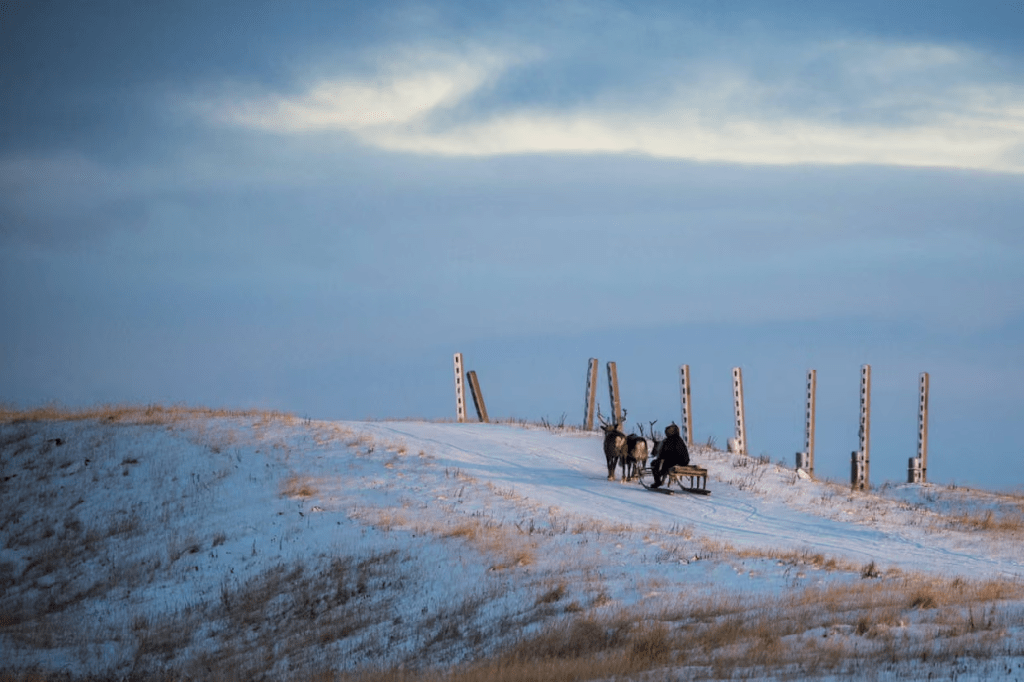
A Nenets man rides a sledge in northern arctic Russia. Photograph: Imago/Alamy
Six months later, one remains in jail. Daria Egereva, one of Russia’s foremost Indigenous rights activists, is accused of membership of a terror group. No trial date has been set. Her supporters say the charges are fabricated and she has been targeted for speaking out.
Egereva was not just any activist. A member of the Selkup indigenous group, from western Siberia, she was a “bright star” of Russia’s indigenous rights movement. As a member of the UN’s Indigenous Peoples’ Coordinating Body, she had international status. Weeks before her arrest, she had played a key role at Cop30 in Brazil as co-chair of the Indigenous People’s Forum on Climate Change.
Her jailing has shone a spotlight on the plight of Russia’s Indigenous people, threatened by authoritarianism, extractivism and climate breakdown.
“They are really seeing the worst effects of climate change,” said Alicia Moncada, director of global advocacy at Cultural Survival, which campaigns for Indigenous rights. “They are on the frontline of the frontline – that’s why [Egereva’s] advocacy was super important.”
The polar north is heating faster than any other part of the planet. In recent decades, temperatures in Arctic regions have risen three to four times faster than the global average. Communities based on permafrost are seeing their world collapse around them.
“The elders are saying that nature has stopped trusting us,” said one exiled Indigenous leader, who requested that his name be withheld. “The traditional ways of predicting nature are not working any more.”
Many settlements sit next to the banks of rivers and lakes. Due to the melting permafrost, those banks are beginning to crumble. “There is a real threat of destruction for a lot of those villages,” said the leader, who spoke through an interpreter. And the melting ice has brought a new source of tension: newly accessible critical mineral resources.
“All these resources of the Russian Federation, a majority of them are located under the lands of Indigenous people: gold, diamonds, oil, gas, coal,” the leader said. “For some people it is a treasure, but for us it is a curse.
“Because the companies are coming to our land for those resources and they are pushing us out. Even if they don’t push us out, the environmental situation in those places will become so bad that we are unable to hunt or fish.
“One of the elders said that we can adapt to anything, but we will not be able to survive without our land.”…
https://www.theguardian.com/world/2026/may/22/jailing-daria-egereva-plight-russia-indigenous-people
******
More Than Two Lakh People Sign Petition Against Great Nicobar Projects
New Delhi: An online petition urging the Union government to withdraw the projects it has planned on Great Nicobar island has garnered more than 2.10 lakh signatures as of Thursday night (May 21). The petition highlights the “extensive deforestation” that the projects will cause and stresses on the need to promote sustainable alternatives for development on the island.
The Union government has planned a slew of infrastructure projects on Great Nicobar Island, the southernmost island in the Andaman and Nicobar archipelago. These include an international transshipment container terminal, a greenfield airport, a township and a power plant….
++++++++++++++++
The Great Nicobar Project – A Geological Folly and a Strategic Gamble

