Amar Kanwar’s film installations at London’s Serpentine North gallery
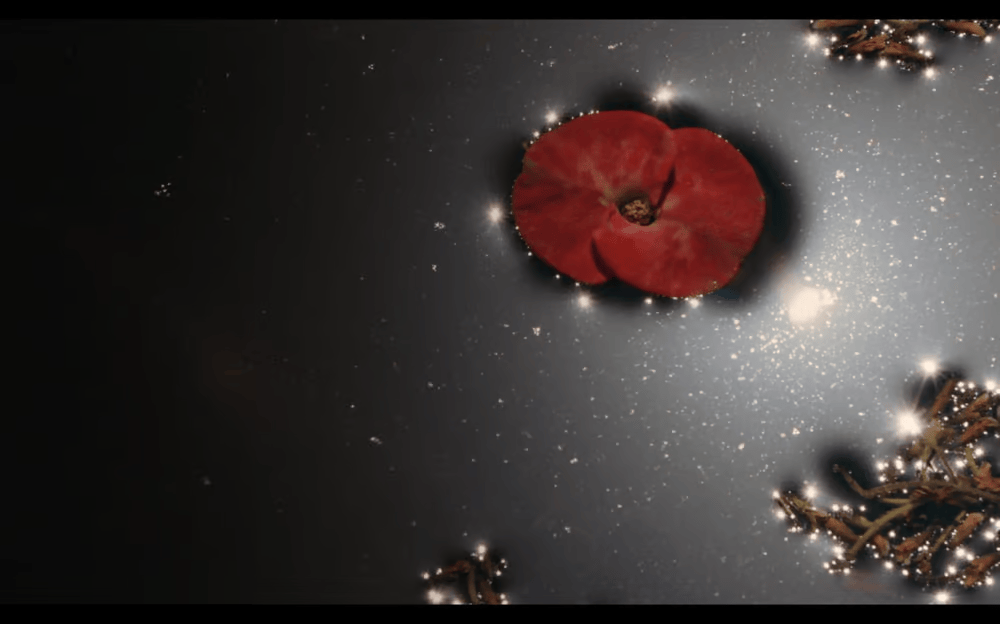
Amar Kanwar, The Peacock’s Graveyard, 2023. (Film still) Digital video installation, 7 screens, dimensions variable, 28 mins, 16 sec. Courtesy of the artist and Marian Goodman Gallery.
This is a transcendent show full of revelations, the kind of show that could change your life – if you let it. Amar Kanwar is a New Delhi-based artist working predominantly in the moving image and for his first London show in 8 years, he’s presenting three films, one feature length alongside two multi-screen film installations. Now these movies aren’t exactly Avengers: Doomsday – we’re talking slow, contemplative parables about the Indian subcontinent. It requires caffeinated Londoners to let go of the hyped-up, logged-on, rat-bot race and adjust to a more meditative pace: a big ask. And also, the entire point.
Kanwar wants people to escaped what he calls the “illness” of contemporary life, when “somebody gets too full of themselves that arrogance takes over the mind”, and his brilliance is in connecting this to stories of the partition of India in 1947, which still reverberates through the generations and that illustrates in the starkest, most violent terms, what happens when people close their ears and start pointing fingers.
In order to bring visitors into this space of letting go of themselves to immerse themselves in his work, Kanwar has made the Serpentine North space so dark when you enter that you can’t see your own shoes. When a gallery assistant loomed out of the shadows towards me, the Standard almost had a coronary; later, a woman fell over a large chair. Despite such giggles, it creates a mood and a process by which to give up your usual phone-faced identity and open up. This is not one of those shows where among the art on the walls there’s a bit of video in a room to check out for a couple of minutes, get the gist, and move on. You really must sit and watch these films, ideally going right to the front seats for the full experience.
The centrepiece feature, Such a Morning (2017), is an elliptic parable of a mathematics professor who leaves his job to move into a train carriage in the woods, where he starts seeing visions and begins writing a dream almanac. An eclipse seems to have been his trigger to escape the world, watched over by crows; he covers the train windows up, and it’s all shadows and feet, and the motion of clouds, the moon. It is slow, slow, slow, but with text accompanying the images on the screen, which poetically suggest apocalyptic happenings, personal devastation, spiritual reckoning, the film is entirely gripping once you adjust to the pace….
https://www.standard.co.uk/culture/exhibitions/amar-kanwar-at-serpentine-review-b1298125.html
++++++
Amar Kanwar review: unflinching Indian artist dares you to step into the darkness (literally)
Ben Eastham
Serpentine North, London
Making lyrical films for over 40 years, about everything from the end of empire to sexual brutality, Kanwar focuses on the parts of gruesome stories that are often missed
The exhibition begins in darkness. A darkness so complete, in fact, that I’m forced to wait at the threshold while my eyes adjust to it. To my left, images flash up on screens that seem to float in the gloom: a peacock preens its wet feathers; dried flowers in a wooden bowl; sunlight scatters on water. When the room has resolved to the point that I can identify a chair to sit on, I realise that these pictures are combined with snippets of text telling stories like parables: about a landlord punished for breaking a promise to a beggar; about two friends who survive a massacre because they are down by the river, arguing over the moon.
Welcome to the world of Amar Kanwar: if you want to find beauty and truth, you must be prepared to step into the darkness. Over 40 years making increasingly lyrical films about stories ranging from the collapse of empire to endemic sexual brutality, the Indian artist has developed a method that neither reproduces the violence of these histories as spectacle nor glosses it over. Instead he trains his focus on those parts of the story that normally escape attention: the shadows, the neglected, the blind spots. He does not find revelation there, at least not of the kind that suddenly lights up the world and makes sense of it. But there are enough flashes of light to guide us through the darkness.
This idea finds its most literal expression in Such a Morning, a feature-length film installed within one of the enclosed spaces that make this old gunpowder store so well suited to Kanwar’s play with darkness and light, secrets and disclosure (the whole exhibition is superbly staged). It tells the story of a mathematics professor who retreats into an artificial darkness in the hope of finding another way to understand the world around him. Through a characteristic combination of exquisite images – a woman sits in a rattan chair clutching an antiquated rifle as her house is dismantled around her – with overlaid text and a trancelike piano soundtrack, the film conjures an atmosphere of commingled crisis and possibility….
++++++++++++++
A Glimpse: award-winning short film about the price of love

