
NB: Our Great Leader specialises in inventing abusive epithets for anyone critical of him or his government. The epithets include desh drohi (anti-national traitors), Khan Market gang, urban Naxals etc. Now he has come up with a new phrase, dimagi naxals – meaning intellectual Maoists. India’s Maoist movement began in 1967, and originated in a rebellion by landless peasants and tea garden workers in Naxalbari, an area in North Bengal.
Ever since then, the term Naxalite or Naxal has been used to describe an extremist communist ideology. Our rulers have now taken to referring to everyone they don’t like as Naxals even if they are not advocates of violent rebellion. Quite clearly, the ideals of a better life for the poor and downtrodden still frighten the ruling class. On this latest outburst, a prominent commentator has this to say on his Facebook page: Dimagi Naxal is a Shiva-bhakta and first Kawariya, maybe from Harappan cities. Jai Naxaleshwara Mahadeva. see below:
What is the meaning of the Dimagi Naxali? And what is its origin? Dimagi means psychological or maybe “intellectual”. Naxal refers to a special river reed that grow in North Bengal (kash grass) with silvery flowers. Naxali then would be the name of Shiva’s Son Kartikeya, who was born amongst these reeds.
The gods told Shiva to give them his semen. So instead of placing it in Shakti’s womb, he gave it to Agni. The fire-god burnt. He thew it in Ganga-river. Ganga boiled. The Naxal grass caught fire. From the ash emerged a boy – Naxali, the son of Shiva. He was nursed by the Krittika constellation so called Kartikeya.
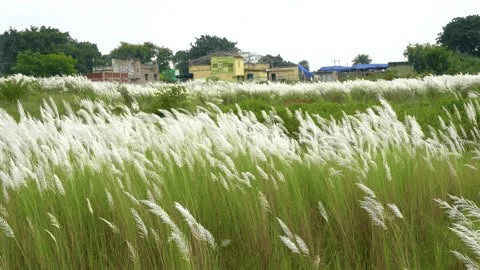
The Tamil version of Naxali would be Saravani, one born in the forest of river reeds. After his birth, Kartikeya carried pots of water on a bamboo shoulder sling, and carried it to mount Kailasa, without keeping the pots on the ground. This was the first Kawar. Naxali people follow this practice.
We find these images of shoulder slings (kawar) in Harappan emojis too. Which means Kawar and worship of Naxali may have existed in Harappan cities too. Mats made of Naxal grass is still popular today. Maybe it was exported from Bengal to Harappan cities in ancient Vedic times.
So Kartikeya or Naxali or Murugan was the first Kawar who worshipped Shiva with pots of water from the river collected in the region where Naxal grass grows. Shiva worshipped on banks of the river where Naxal grass grows is called Naxaleshwar Mahadeva. So Dimagi Naxali is a Shiva-bhakta, one immersed in worship of Shiva, and Kartikeya, like the ancient Tamil Nayamnars.
Beauty of Sanatan Dharma (BoSD) is these fabulous stories. Dimagi Naxal is Shiva-bhakta and first Kawariya, maybe from Harappan cities. Jai Naxaleshwara Mahadeva.
Is Dimagi Naxali a fact or fiction or faith? You decide. Unlike Islam, Hindu wisdom is oral not textual.
Devdutt Pattanaik’s Facebook Page
+++++++++++++++++
Domination and Chaos: India’s radical conservatism
A Hard Rain Falling: on the death of T. P. Chandrasekharan (EPW, June 2012)
As Naxalism Fades, Adivasi Futures Still Stand on Precarious Ground
Some uncomfortable thoughts on ‘urban naxals’
Naxalites should lay down their arms and challenge the ruling class to abide by the Constitution
Closing the Circle (Frontier, August 2012)
Permanent Spring: Indian Maoism and the Philosophy of Insurrection
Annihilation – 50 years of Naxalbari
In Naxalbari, forty-eight years later
A Political Man: Memories of Ranajit Guha
Yesterday once more – 50 years after Naxalbari
An Open Letter to the world on the Bangladesh crisis of 1971
Achintya Barua remembers Ranajit Guha
Dilip Simeon: Militant capitalism, bad infinity, and the longing for total revolution
What I learned from G. N. Saibaba
The Disappearing Present: Reflections on Ideology: Webinar delivered on October 16, 2020
Review of Subaltern Studies (2001)
Glory Days, or remembering how Indians love(d) China
Ajay Singh: Fiji – A Love Story
Memoir: Prahlad Kakar and Dilip Simeon: A Friendship in the Shadow of the Naxals
Dilip Simeon: Militant capitalism, bad infinity, and the longing for total revolution

